
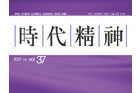
It needs to establish a so-called “North Korean Human Rights Foundation,” led by NGOs and supported by the government, while inside the Ministry of Unification keeping only a small bureau of human rights for North Korea, argued Daily NK’s editor Sohn Kwang Ju in Spring edition of quarterly magazine Zeitgeist.
In his article, titled “NGO-led Government-supported Strategy to Improve North Korean Human Rights,” Sohn said “to approach North Korean human rights issue with systematic means, human rights legislation, building bureaucratic support, cooperation between government and NGOs and international collaboration.”
He pointed out that human rights issue must be approached with long-term perspective and, even if being slowed down, it must be a systematic approach with consistency except political consideration.
He explained necessity of semi-public, semi-private North Korea human rights foundation by describing activities of National Endowment for Democracy in the U.S., Taiwan Foundation for Democracy and Westminster House in the U.K.
“Particularly,” Sohn suggested, “given last administrations’ failure in North Korea human rights policy because of their political and factional approach toward human rights, it is critical to keep three principles in mind, namely human rights as universal rights, no politic involved, and international cooperation.”
“North Korean human rights policy’s long-term objective must be giving rights to pursue humane life and liberal democracy to the North Koreans. For this, return of former POWs and abductees kept in North Korea to the South, ban on forced repatriation of defectors and guarantee of minimum rights of North Korean people must be preceded,” said Sohn.
To the Lee Myung Bak Administration, Sohn demanded legislation of North Korean Human Rights Act, establishing Bureau of North Korean Human Rights in the Ministry of Unification, nominating a North Korean Human Rights ambassador and founding human rigiths depository.
For public education, Sohn suggested to let NGOs, rather than a government agency that is vulnerable to political changes, to run a reunification education center to teach the public about North Korea.
Also, to deliver South Korean people’s voice to North Korea easily, he emphasized importance of “letting private organizations to share government-controlled radio waves.”