
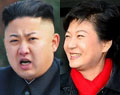
One of the major questions to emerge from Park Geun Hye’s election victory is whether or not her administration can craft an inter-Korean breakthrough.
One of Park’s key election commitments was to find a way to kick start a process of inter-Korean trust building. She said she wants to embark upon political and military trust building alongside social and economic exchanges and cooperation. This was seen as a more flexible policy than that of the Lee administration, one designed to solve inter-Korean problems through diverse communication channels, all without the onerous burden of preconditions.
As such, Park promised support for cooperation in fields of power generation and distribution, transportation and communications infrastructure, among others. She is also said to be willing to support North Korean registration with international financial institutions, along with active trilateral cooperation with China, Russia and others.
However, while Park originally emphasized the resumption of talks without condition, North Korea’s recent long-range rocket launch made it clear to her that flexibility, not to mention North Korean sincerity, will clearly be required if things are to improve.
“Only if North Korea makes its commitments with sincerity will it be credible with the international community, and the trust process will then work properly on the Korean Peninsula,” according to Park. During one of the presidential debates, she also noted, “Real peace and fake peace must be distinguished from one another, and peace with unlimited aid is not real peace. Even though the Roh Moo Hyun administration gave a lot, North Korea still conducted its first nuclear test in 2006.”
There is a very good chance that the North Korean authorities will not want dialogue, however, and this could result in a policy similar to that of the Lee Myung Bak administration, which claimed to want to resume inter-Korean exchanges and cooperation but only if North Korea apologized for killing Park Wang Ja, the sinking of the Cheonan and shelling of Yeonpyeong Island. He got the first, although not publicly enough for his liking, but saw no sign whatsoever of the second or third.
There are those who see Park’s policy as disconcertingly vague. It is certainly unclear whether she wants inter-Korean dialogue first or an apology from North Korea for these provocations and a guarantee of no repetition first. Moreover, it is unclear what kind of leverage she has if North Korea rejects dialogue, meaning that that she may lack a compelling strategy through which to induce change in North Korea.
As Korea Institute for National Unification’s Park Young Ho told Daily NK, “If Park puts up preconditions like the Lee administration did then inter-Korean relations will likely continue to be the way they are. Therefore, Park is going to have to resume inter-Korean dialogue and work from there. The new administration must apply North Korea policy with the greatest of care.”