
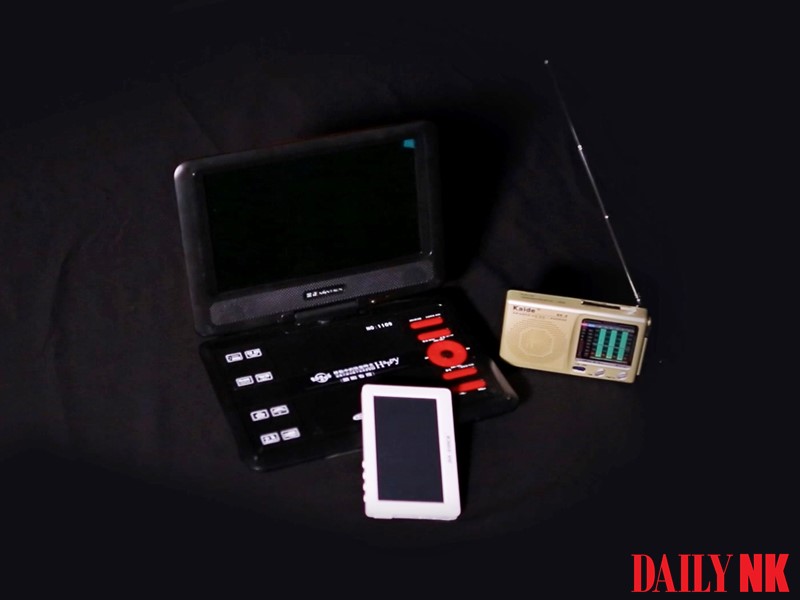
North Korean state security agencies have detained dozens of people for watching videos of South Korean singer Cho Yong-pil’s wildly popular “This Moment Forever” performance on South Korean broadcaster KBS during last year’s Chuseok holiday, recordings of which have circulated in the North via USB devices.
A Daily NK source in North Hamgyong province said recently that videos of Cho’s “This Moment Forever” concert, which appeared on South Korean TV around October of last year, “were circulating in the North via USBs,” and that the provincial branch of the Ministry of State Security “had begun investigations to minutely track the videos’ distributors and distribution channels.” In particular, the military’s security department was involved in the investigation “since not only ordinary people, but also several soldiers were busted,” he said.
According to the source, state security agencies had detained over 50 people in Rason, Chongjin, and other places in the province between Dec. 20 and Jan. 20.
Most of the detained individuals told investigators that they watched Cho’s performance because they “thought there’d be little problem with it,” that they thought the video was safe to watch “because Cho had once performed in Pyongyang and they believed he was a South Korean singer the party approved of,” or that they watched it “because his songs don’t slander North Korea, nor do they contain weird or dangerous ideas.”
Investigations expand to uncover broader consumption
However, state security agencies grilled the detained individuals, believing they had likely watched other videos besides Cho’s performance. Ultimately, several of them confessed to watching other videos—or seeing pictures—from abroad.
During questioning, it emerged that the detained individuals had long watched South Korean news and other content on the political situation in China or the state of the Russia-Ukraine war. In response, state security agencies are now focused on investigations to uncover the sources of this outside information and how it was distributed, and to identify the distributors and distribution channels.
“The detained people uniformly testified that they usually received the videos from unknown people through unofficial distribution networks in the marketplace,” the source said. “State security officers are racing around, determined to find the distributors, but they are having a tough time because identifying them isn’t easy.”
State security agencies in each region have intensified joint investigations to determine how widely foreign videos, photos, and other files have penetrated through USB devices and to confiscate the materials they discover.
“The authorities are taking the latest case more seriously because the files are spreading largely in border and port cities like Rason and Chongjin; they are spreading rapidly because they are saved on USBs; and the people who have been busted include not only ordinary folk but also soldiers,” the source said. “Currently, the Ministry of State Security is demanding that officers investigate the matter with the firm determination to root out the problem completely.”
Reporting from inside North Korea
Daily NK operates networks of sources inside North Korea who document events in real-time and transmit information through secure channels. Unlike reporting based on state media, satellite imagery, or defector accounts from years past, our journalism comes directly from people currently living under the regime. We verify reports through multiple independent sources and cross-reference details before publication.
Our sources remain anonymous because contact with foreign media is treated as a capital offense in North Korea — discovery means imprisonment or execution. This network-based approach allows Daily NK to report on developments other outlets cannot access: market trends, policy implementation, public sentiment, and daily realities that never appear in official narratives.
Maintaining these secure communication channels and protecting source identities requires specialized protocols and constant vigilance. Daily NK serves as a bridge between North Koreans and the outside world, documenting what’s happening inside one of the world’s most closed societies.