
Survey covers major cities and counties
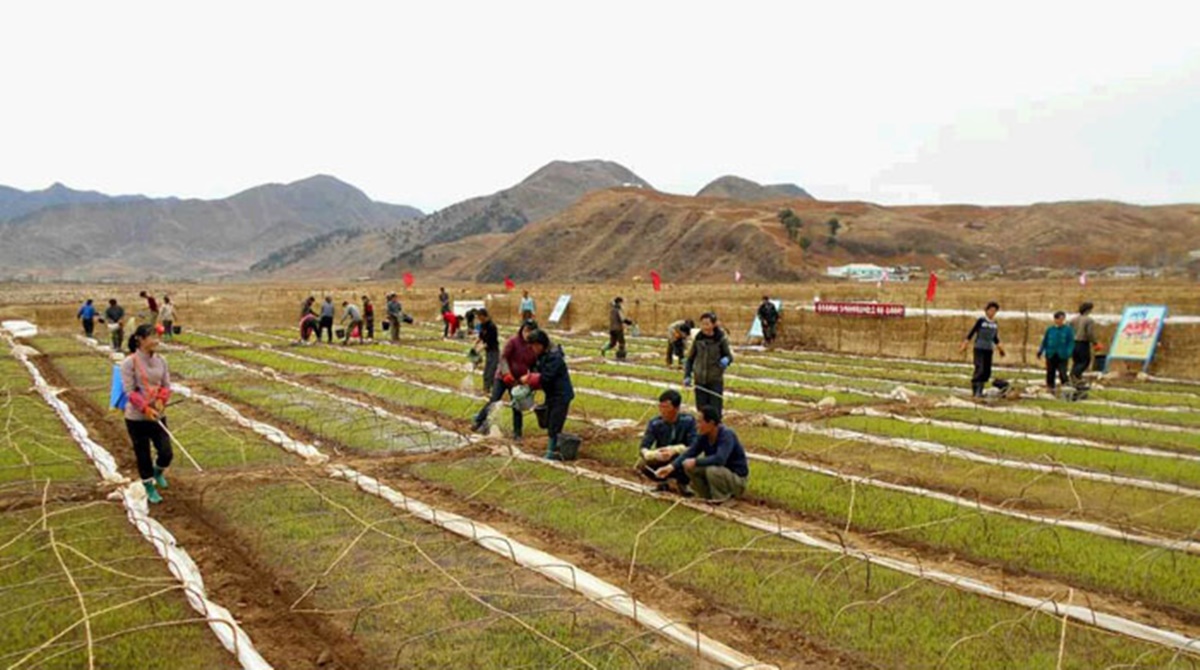
The report is supposed to provide basic data about electricity supplied to newly built and expanded residential complexes in major cities and counties in North Hwanghae province over the past six months — from December last year to the end of this year’s rice transplanting season. The report will also cover installation and maintenance costs for transmission and distribution equipment and the need to regulate power supply. This data will be used to check whether farms received adequate electricity during rice transplanting.
“The survey covers nine administrative areas in the province including Sariwon and Hwangju, Singye and Yonsan counties, focusing on power supplied to apartment complexes that were finished at least three months ago. Apartment complexes are being sorted into three groups based on their transmission load, average evening power use (6:30-10 p.m.), and use of electric heaters,” the source said.
The survey has found that average power use at the apartment complexes was 132% of the limit approved by the province’s power grid and that, in some areas, circuit breakers were repeatedly tripping due to overuse of electric heaters.
The provincial power transmission and distribution department has classified these areas as “unmanageable load zones” and is examining power usage there more closely.
Complexes face power restrictions
“The provincial power transmission and distribution department is categorizing apartment complexes into three zones: those preapproved for power usage, those given partial approval for certain times of day, and those pending notification about a power shutoff. Of the 42 total complexes, 13 will be designated for micromanagement to stabilize the power grid, which will involve completely banning the use of electric heaters and cooking equipment,” the source said.
In the same report, the transmission and distribution department will highlight that the apartments were not designed with power supply in mind. This has led to power overloads, with the consequence that people’s use of electric heaters is being treated as illegal, department officials said.
“The report notes that many new apartments were designed around electric heaters without accounting for the practical matter of power supply. Finishing apartments on the government’s schedule was prioritized without calculating the total power load,” the source said.
Department recommends design changes
In its report, the transmission and distribution department plans to suggest that future apartment construction projects should be required to check power equipment capacity and submit data from load simulations. The department also plans to recommend drafting plans to install devices that automatically cut power at certain times even in preapproved zones and to lay dedicated circuits for heating and cooking equipment.
The transmission and distribution department’s report will also address random checks for power usage after cutoffs are announced, an approach being tested in certain preapproved zones. The report says this approach is effective at restricting power usage despite pushback from some people.