
The recent release of a comprehensive report (read here in Korean) by South Korea’s Ministry of Unification into North Korea’s economy not only provides insights into the nation’s economic landscape but also illuminates the intricate challenges faced by the ministry itself. Struggling quite unsuccessfully with a diminished role since the closure of Mt. Kumgang tourism in 2008 and the Kaesong Industrial Complex in 2016, the MOU is now under threat from a new source: North Korea’s pivot away from inter-Korean relations.
In this challenging institutional landscape, the report, which spans 2013 to 2023, offers a granular guide to a multifaceted economic rearrangement that began under Kim Jong Il in approximately 2009 but has ramped up during the Kim Jong Un era. It highlights significant transitions, including shifts in the command economy, the emergence of the Chinese yuan as a pivotal tool for transactions in North Korea’s border region (but not nearly so significantly in the capital), expanding private agriculture nationwide, and the scourge of rising inequality. All known phenomena, but rarely so clearly articulated.
While it has long been widely known that the renminbi has become a preferred medium of exchange in border regions adjacent to China, showcasing the pragmatic economic relationship between North Korea and its neighboring economic powerhouse, the report reveals a nuanced picture of economic practices in other regions of the country. The adoption of the yuan in border regions and widespread use of US dollars in the capital city, for instance, reflect the diversity and complexity of economic interactions, mirroring broader regional disparities in politics, society, and even people’s identities.
Delving deeper into the economic tapestry, several further observations come to light. The average size of private agricultural plots appears to have grown over time, and if so, this is just as well, since the report further reaffirms that most people have not received much by way of Public Distribution System (PDS) rations for a very long time. This long-standing issue of transitioning from state provision of rations to the market underscores the challenges of food security and the limited access to essential resources faced by a substantial portion of the population.
In the end, these findings hint at the sheer scale of inequality in North Korea which, while always notable, has grown more acute under Kim Jong Un. The widening wealth gap – at least until the coronavirus pandemic made everyone poorer, including the ordinarily affluent families of Pyongyang – poses significant challenges for North Korean society, impacting already heavily circumscribed and politicized access to resources and opportunities.
A perfect storm of challenges
The report is, then, fascinating in so far as it documents a decade of very real change in North Korea. But equally important are the politics of the issue in the institutional landscape of the South Korean government. Today, the MOU grapples with North Korea’s recent pivot away from inter-Korean relations. The decision to halt cross-border tourism and closure of a symbolic inter-Korean light manufacturing zone at Kaesong had already diminished the ministry’s role, but recent challenges seem set to exacerbate those weaknesses. The ministry’s initial response to North Korea’s bellicose anti-South rhetoric, essentially to reject it at face value, will not make the problem go away.
Rather, facing a perfect storm of pressures, the ministry will ultimately find it has to lean into the problem, redefining its role as a way to survive and transforming into a key player in shaping a new public discourse on North Korea. The comprehensive nature of the new report showcases the ministry’s potential to offer valuable insights given the unique data sets at its disposal, creating an opportunity to carve out a niche that aligns with the evolving dynamics of the Korean Peninsula.
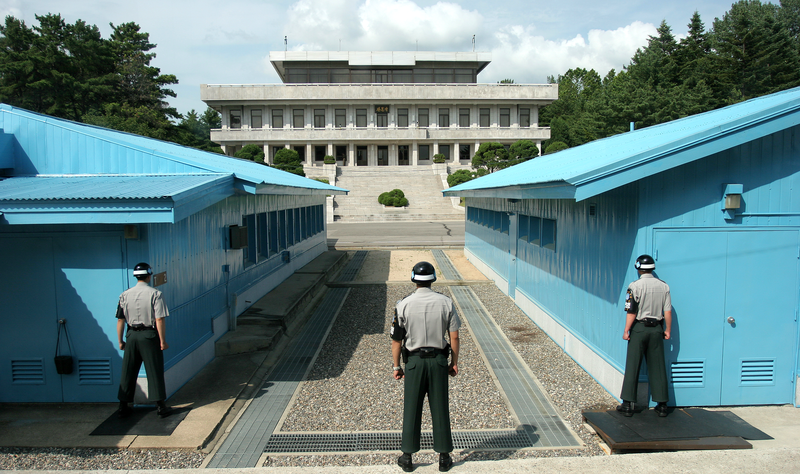
Continuity and change are on display on both sides of the DMZ, then. Economic insights that enrich our understanding of change in North Korea, and a ministry facing the daunting task of adapting to North Korea’s revised stance on inter-Korean relations. As we unveil North Korea’s economic tapestry, we can also observe the intricate challenges faced by institutions like the MOU, emphasizing the need for adaptability and a renewed sense of purpose in shaping the discourse on the Korean Peninsula.
Views expressed in this guest column do not necessarily reflect those of Daily NK.