
[imText1]Christopher Hill, U.S. Assistant Secretary of State for East Asia and Pacific Affairs and the head of the US delegation to the Six-Party Talks, said on November 2nd that all disablement processes of North Korea’s nuclear programs will be completed by early next year.
On this day, the Assistant Secretary had arrived in Japan, the last leg of his tour of three East Asian countries: South Korea, China and Japan. After a meeting with Mr. Kenichiro Sasae, head of the Asia-Oceania Bureau at the Japanese Foreign Ministry and Japan’s top negotiator in the Six-Party Talks, Assistant Secretary Hill said, “We anticipate a very busy time in the next couple of months.”
Hill stated, “We are expecting the first draft of the declaration probably in the next couple of weeks,” and stressed, “If we can get through this list, I am hopeful that we will create a situation where the momentum will push us through the entire process of denuclearization by early in the coming year.”
Many people are speculating the implications surrounding Secretary Hill’s remarks.
If one takes his words literally, it means that North Korea will begin to declare its nuclear weapons within two to three weeks. If the North finishes declaring all of its nuclear programs by the end of this year, this will help the disablement process gain momentum, and by early next year, the Six-Party talks could complete its mission to achieve the complete denuclearization of North Korea.
“By the end of year– in terms of the road toward complete denuclearization — we hope to have arrived at an important milestone where there is a complete disablement of the Yongbyon facilities, where there is a full list of additional facilities which also need to be disabled, and where the uranium enrichment [issue] is resolved to mutual satisfaction.”(www.state.gov)
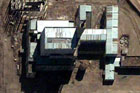
Assistant Secretary Hill’s remarks echo the October 3 Agreement of the Six-Party Talks, which calls for the disablement of three nuclear facilities at Yongbyon and the declaration of all nuclear programs by December 31, 2007. According to the agreement, declared nuclear facilities are to be disposed of without going through the process of disablement. If that is possible, the complete denuclearization could possibly be realized by early next year.
Hill’s words are not mere lip service. In fact, they are of particular importance since they came following a meeting with North Korea’s Vice Foreign Minister, Kim Kye Gwan, in Beijing.
Choson Shinbo, the Japan-based newspaper which defends North Korean positions, asserted in a November 1st article titled “The beginning of a new state of affairs-Chosun’s resolution and changing situation” that “Chosun (referring to North Korea) will fulfill the agreement of the Six-Party Talks and will meet the deadline for the disablement of its nuclear facilities.”
Quoting one Japanese man, the Shinbo promoted Sunsupilseong (先手必勝, meaning that you need to take the initiative to win). “Chosun should not step back and wait till a change comes,” said the man, suggesting that North Korea must not only be determined to carry out the second stage of the disablement process but must also be willing to speed up the process and take the initiative to do so. In regards to this, North Korea has been sending a positive signal to the US.
However, Hill’s words have aroused criticism as well. Although Assistant Secretary Hill confidently mentioned “the completion of the disablement process” by early next year, he might have mistakenly taken the ongoing positive “signal” as the possibility for actual “denuclearization,” without speculating North Korea’s true intentions.
In actuality, it is not clear whether the completion of all disablement processes by early next year really means the final denuclearization of North Korea. Some argue that rather than a short-cut to complete denuclearization, completion of all disablement processes is merely the fulfillment of the second phase of actual disablement as agreed in the last Six-Party Talks.
Chun Young Woo, the head of the Office of Korean Peninsula Peace which was recently launched by the South Korean Foreign Ministry, said, “North Korea explicitly stated that it would carry out the disablement process and declare all nuclear facilities. It also gave details about how to carry out the declaration process.” Mr. Chun’s words suggest real progress.
However despite this progress, critics have purported that Hill’s remarks about the completion of the disablement process by early next year may end up being devoid of meaning. Mr. Chun responded to Assistant Secretary Hill’s announcement, saying “That sounds terrific. Nonetheless, it is unrealistic to believe that we could achieve final denuclearization by early next year.”
Most experts anticipate that the disablement of Yongbyon facilities will proceed smoothly. However, they remain uncertain whether North Korea will really give up its last 50 kg of plutonium, as Hill has insisted.