[imText1]“Kim Jong Il feels extremely uneasy about the prospect of being deserted by his people, as occurred to late Romanian dictator Nicolae Ceausescu,” Kim Heung Kwang, leader of North Korea Intellectuals Solidarity (NKIS), wrote in the latest edition of the organization’s monthly newsletter.
One of the most shocking memories of the late 1980s, the period when the Eastern Bloc fell apart, was dictator Nicolae Ceausescu’s execution by the Romanian army on Christmas Day, 1989.
North Korean defectors believe that Kim Jong Il’s fate will be somewhat comparable to that of Ceausescu, according to Kim. The North Korean people will not let Kim go without making him pay a price.
The similarities between Kim Jong Il and Ceausescu, the brutality, the self-idolization, and the profligacy, provide a good starting point for any comparison. The only real difference is that while North Korea is still governed that way, Romania isn’t.
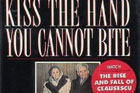
Edward Behr, in his book “Kiss the Hand You Cannot Bite: The Rise and Fall of the Ceausescus”, chronicles the life of Nicolae Ceausescu, from his appearance to his demise.
Ceausescu rose through the ranks, from a member of the Romanian Communist Party Central Committee to full membership of the Politburo, First Secretary of the Romanian Workers’ Party, and eventually President of the State Council, a role which he took four times during his tenure. The methods he employed in governing his people were comparable to Kim Jong Il’s in terms of brutality and ruthlessness.
His personal spending was extravagant, and he maintained tight surveillance of his key aides to detect any resistance brewing behind his back.
His people suffered, but his secret overseas bank accounts contained approximately $400 million by the end. The Romanian authorities were not the most eager to raise complaints, bound by fear of Ceausescu’s “Securitate,” or secret police. The entire country had to kneel before his absolute authority. The resemblance to today’s Kim is uncanny.
The author shows in detail Ceausescu’s demise and eventual death in the opening pages of the book. In 1989, the Romanian people, unable to bear his dictatorship any longer, staged an anti-government protest.
Ceausescu tried but eventually failed to suppress the riot, and was arrested by the army, later to be executed by firing squad, a death broadcast on state television to ensure the people knew the nightmare was over.
He was reported to have said to the major who imprisoned him that he would give the major one to two million dollars, or a down payment of millions of Romanian Leu, if he would evacuate him to a broadcasting station.
At the final trial, Ceausescu flatly denied accusations of subjecting the Romanian people to poverty, saying that his people were “provided with 200 kilograms of flour and food a year for the first time in their lives”, calling it a “feat unmatched in Romanian history”.
His claims bear resemblance to one of Kim’s recent assertions. In January, he made a promise that he would let his people eat “white rice and beef stew”.
Ceausescu also denied any knowledge of the $400 million that was stored in his secret overseas account, saying that he did not deposit a single dollar in an overseas bank.
The murders that took place during protests in the city of Timisoara also apparently failed to register in Ceausescu’s mind. He resorted to denying that the event had ever happened.
The author says that attempts at self-idolization could be found in history books during Ceausescu’s reign, too. The books implied that only three kings, namely ‘Burebista’, ‘Decebal’, and ‘Mihai’ could ever compare to the ‘Great Leader’ Ceausescu. They went on to say that four brave leaders who looked upon Mihai had settled in Scornicesti, the place of Ceausescu’s birth, and that Ceausescu was one of their descendants.
Ceausescu, who pioneered his own cult of personality, was eventually sentenced to death alongside wife Elena by his own people. Their corpses were hastily removed from the scene right after the execution, only to be found deserted in a nearby garage the next morning. This was how the dictator’s glory days came to an end.
Will Kim Jong Il face the tragic fate of Ceausescu? Will the people of North Korea take on the mantle of their Romanian counterparts and play a pivotal part in the dictator’s demise, in the form of mass demonstrations against the government?