

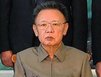
The latest batch of Wikileaks releases have revealed Kim Jong Il’s frustration at the leading role in inter-Korean relations in the Lee Myung Bak era played by South Korea’s Ministry of Foreign Affairs and Trade (MOFAT), rather than the Ministry of Unification.
According to fresh U.S. diplomatic cables released by the whistleblower website, Kim Jong Il made the comments during a meeting with Hyundai Group Chairwoman Hyun Jeong Eun in 2009.
The information, contained in a U.S. embassy cable returned to Washington, D.C. on August 28 the same year, is based on a breakfast meeting conversation between Hyun and Kathleen Stephens, the U.S. ambassador to South Korea.
According to the cable, Kim Jong Il “claimed a lack of trust between the two Koreas was the main reason for ‘difficulties’ in inter-Korean relations.”
“KJI wanted the current ROK administration to recognize the spirit of the June 15, 2000, and October 4, 2007 inter-Korean agreements signed by KJI himself. He commented that, while both ROK signatories to those agreements had passed away, ‘I’m still alive,’ stressing that the agreements should be respected. During the dinner, KJI also emphasized ‘eui ri’, a combination of righteousness and loyalty, and spoke often of Hyun’s late father-in-law, Hyundai founder Chung Joo-young, and Hyun’s late husband Chung Mong-hun,” the cable states.
Kim Jong Il could not understand why the Lee administration was not taking advantage of officials with a lot of knowledge and experience about North Korea, saying “that the Ministry of Unification (MOU), the DPRK’s former ‘handler,’ had ‘lost the driver’s seat’ to MOFAT, an entity which KJI asserted ‘did not understand North Korea.'”