
1. North-South economic cooperation and the results of the Inter-Korea Summit
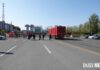
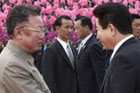
[imText1]President Roh Moo Hyun and Kim Jong Il held summit talks in Pyongyang, from October 2nd to the 6th of this year. The talks resulted in the adoption of the “Declaration on the Advancement of South-North Korean Relations, Peace, and Prosperity.”
This Inter-Korea Summit Declaration laid out several measures for improving peace and stability on the peninsula, including: the creation of a “special peace and cooperation zone in the West Sea” encompassing the port of Haeju and its vicinity; working together to replace the armistice that ended the Korean war with a formal peace treaty through consultation with three or four of the states involved; the creation of a joint fishing area in the West Sea and allowing for the passage of civilian vessels through this region via direct routes to Haeju, and finally, the joint use of the Han River estuary.
President Roh became the first sitting president to cross the Military Demarcation Line on foot.
2. February 13 Agreement and the Six-Party Talks
The Six-Party Talks, attended by the six parties involved in resolving the North Korean nuclear weapons dispute—North and South Korea, the U.S., China, Japan, and Russia—opened at the Diaoyutai Guesthouse in Beijing on February 8th. The participating countries, through an intense cooperative process, announced the “initial measures (February 13 Agreement) for the implementation of the September 19 Joint Declaration” 17 months after announcing the “2005 September 19th Joint Declaration.”
“The February 13 Agreement” which is characterized by the principle of “action for action” is divided into two phases: the first involves shutting down and sealing off the Yongbyon nuclear facility, including the reprocessing facility. The second phase includes inviting IAEA personnel to return to the country to conduct all necessary monitoring, verification, and declaration of all its nuclear programs as described in the joint statement, including plutonium that was extracted from used fuel rods.
In exchange for the fulfillment of these obligations, the remaining five countries promised 1 million tons of heavy fuel oil and economic, energy, and humanitarian aid to the North. Furthermore, five working groups to deal the following issues were set up: denuclearization of the Korean Peninsula; normalization of U.S. and North Korean relations; normalization of North Korean and Japanese relations; economic and energy cooperation; and a Northeast Asia Peace and Security Mechanism.
Afterwards, the participating nations announced the “Second-Phase Actions for Implementation of the Joint Statement” (the October 3 Agreement) for the implementation of the September 19th Joint Declaration.
3. Settlement of over 10,000 defectors in South Korea
[imText2]On February 16th, the number of North Korean defectors living in the South exceeded 10,000 people. The flow of defectors began following the signing of the Korean War Armistice in July 1953, and dramatically increased after the “March of Tribulation” in the mid-1990s. The number of defectors has exceeded 1000 people per year since 2002.
The Ministry of Unification increased the employment subsidy granted to defectors while reducing the settlement support fund to 6,000,000 won from an original level of 10,000,000 won (for a household of one). This fund is supposed to facilitate the settlement of defectors. When the term of employment exceeds one year, an additional employment subsidy of 15,000,000 won per every three years is given.
At the same time, the number of defectors residing in Thailand, Vietnam, Laos, Mongolia, and China is estimated to be at least 50,000.
4. The flood disaster in August
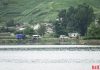
[imText3]The North Korean Central Statistic Bureau disclosed that 600 people were deceased and over 4,000 were wounded or missing due to 500 to 800 mm of concentrated rainfall, wind, and landslides. The total number of those affected by the flooding ranged from 600,000 to 900,000.
The United Nations Office for the Coordination of Humanitarian Affairs (OCHA), through a comprehensive report compiled by the North Korean government and international organizations, revealed that the number of deceased reached 454, the number of missing was 156, and the number of wounded was 4,351. 40,463 residences were completely destroyed, 67,056 partially destroyed, and 133,732 were submerged.
The Central Statistic Bureau relayed that over 200,000 hectare of farmlands suffered damage and the OCHA estimated that 223,381 hectares of arable lands were affected, which means that a total of 20% of rice fields and over 15% of cornfields were swept away, buried, or submerged.
In addition, around 8,000 public buildings and several power plants were submerged and several tens of tons of coal were lost. The Bureau disclosed that enormous damage had been incurred to the nation’s road and rail infrastructure
5. The execution of high-handed market regulations after the Summit Talks
[imText4]The North Korean authorities, in contrast to its gesture of opening to the outside world and an increase in North-South economic cooperation, have strengthened internal regulations of the market after October.
The North Korean Workers’ Party circulated an internal document entitled “Let Us Harbor the Right Mentality Toward the Market and Uproot Anti-Socialist Acts that Infringe on the Gains of the Citizens” and have strengthened regulations in the markets. The document prohibits the undertaking of business by women under 40 and orders the return of younger women to national enterprises or to their professions.
Especially recently, the People’s Safety Agency and the National Security Agency have been mobilized and have stepped up enforcement of market regulations, so the overall market atmosphere has been chilled, evidenced by the increase in tensions evidently felt by the merchants.