

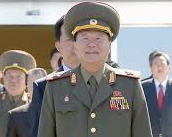
On the 22nd, Kim Jong Eun’s close advisor and director of the Chosun People’s Army General Political Department Choi Ryong Hae was sent on a surprise visit to China as a special envoy from the North Korean leader. The visit is attracting interest worldwide, especially in terms of whether it will lead to a summit between Kim Jong Eun and Xi Jinping.
First and foremost, it is widely presumed that if Choi does not have with him a forward-thinking position on denuclearization and/or reform, it will be difficult for a summit to occur. China appears to now be participating in sanctions against North Korea to some degree, primarily because of Pyongyang’s most recent long-range missile launch and third nuclear test. Therefore, unless Pyongyang commits to change in a meaningful way, China will not grant the request for a summit.
However, North Korea wishes to be seen as a nuclear power. China has taken a stern position, not condoning North Korea’s nuclear developments and requesting that there be no further provocative actions. Thus, the message Kim Jong Eun relays through Choi is unquestionably crucial to the ultimate outcome of the trip, but it certainly is not likely that China will agree to a summit without firm conditions.
There are several conditions that China will seek before agreeing to host a meeting with Kim: among them, the Six-Party Talks to restart, for example, provocations to be stopped, and, ideally, Kim Jong Eun to accept the obvious need for economic reform.
North Korea is surrounded by negativity. Two years after taking power, financial difficulties continue. North Korea needs Chinese help now more than ever. But moreover, because North Korea prioritizes the regime’s propaganda image, it needs to construct an image of Kim Jong Eun as a great international leader, and Xi Jinping is one of very few significant leaders prepared to take part in such a show.
Choi Ryong Hae is probably advocating the restoration of the two countries’ relations for this last reason. China, meanwhile, may indeed see such a summit as a way to manage and control North Korea, or to add vigor to its economic cooperation with Pyongyang.
“North Korea becoming a normal member of the international community through open reform is in accord with China’s national interests, whereas creating crises is not. As such, China might judge that a summit represents a good means of inducing North Korea into going in the direction China wants it to,” one China specialist told Daily NK on condition of anonymity.
However, compared to North Korea, which clearly wants a summit, China does not seem to be in any hurry. It is said that since Kim Jong Eun seized power he has been actively pushing for a summit, but China has refused time and time again. Indeed, on May 8th Daily NK cited a high-ranking inside source as saying that Kim Yang Geon, the head of the Workers’ Party United Front Department, went to China in April to consult on a summit trip, but China refused, telling him that it was an inappropriate time.
Choi Chun Heum, a senior researcher with Korea Institute for National Unification, said, “China is getting good feedback from the international community for participating in the sanctions against North Korea, and from China’s point of view there is no reason to hurry into a summit.”
“If there is a summit, Kim Jong Eun will not visit unofficially like Kim Jong Il did. It will have to be a state visit,” he went on. “North Korea would then propagandize this as the consummation of diplomatic relations with China”.
Some point out also that China may even feel a certain burden at having a summit with a young leader like Kim Jong Eun, whose hereditary ascent to power is unacceptable in communist orthodoxy. As one specialist on North Korea put it, “There is the possibility of Xi Jinping holding a summit if the atmosphere is ripe for denuclearization. However, there could also be domestic opposition over a summit with such a young, dynastic leader.”