
[imText1]As we enter July, news from North Korea informs that the rainy season has begun. Similar to South Korea, the rainy season begins in July until August.
While the rainy season does provide good news for farmers who had been experiencing a drought in June, on the other hand, flooding also causes severe damages and great anxiety.
On the 29th June, the Ministry of City Management and Land Environment in North Korea urged to begin work in preparation for the rainy season, “Work has begun in the rivers such as the Yalu River, Tumen River and Chongcheon River in order to block damages from flooding.”
Amidst the continental climate, North Korea’s average rainfall is 600~1,000mm, though this differs greatly per region. This is less than South Korea’s average rainfall of 1,250mm which is influenced by the oceanic climate.
However, North Korea’s manpower and infrastructure such as the weather forecast, environment surrounds, dam constructions, water maintenance and flooding preparations is deeply inadequate compared to South Korea and hence when flooding does occur, North Korea’s damages are by far greater.
Caused by construction of terraced farms in the 70’s and indiscriminate forest denudations in the 90’s
The greatest danger and misfortune during the rainy season is flood damages.
In the North Korean inland regions such as Chongcheon river and Daedong river, water runs at an extremely rapid pace because of steep river beds. In the provinces of Jagang, North Pyongan and South Pyongan, water from the Chongcheon river raises hastily and swiftly even in a single night.
The reason behind the rapid rise in water levels lies in the dissipated forests which once stood on the mountains near the Chongcheon river. In the 70’s, North Korea began to make the terraced farms on mountains to look for new land and to increase food production, as a result, mountains were made barren. Any type of arable mountain was stripped bare and replaced with corn and fruit trees.
In 95~97, this was one of the main factors which led to severe food shortages and flooding. Having formed the mountains into stairs, there was no way of controlling the flooding.
On top of this, during the mid-90s and massive food crisis, the people indiscriminately turned any mountain 60 degrees or less in incline into a barren land. Whereas tree roots and the mountain itself would normally block a great amount of water, nature had been plucked out of the ground with falling rain and mud running speedily towards the rivers.
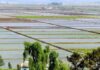
For the past few decades, rainfall and mud has built upon the riverbeds to the point that it is difficult to distinguish between farmland and water levels. Now, even though it may rain only a little, the water rises speedily flooding the farmland.
During the rainy season, the roads collapse and a difficult situation arises. Not only does the overflowing river damage agriculture but the roads become emerged in water also. Excluding the highways connecting Pyongyang to Heecheon, Wonsan and Kaesung and the secondary roads connecting to Pyongyang and Shinuiju, all other roads in North Korea are unpaved and made of dirt.
In 1995~97, North Korea experienced severe rainfall and flooding for 3 years and was unable to recover the roads until 1998. Every year since 1998, in March and November, constructions to cultivate land begin to conserve the roads and riverbanks.
During the 70s and 80s, North Korea constructed floodgates at various locations along the major rivers and banks so that water could pass through. However, due to a lack of manpower and equipment, constructions were neglected.
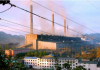
Of course, not everyone suffers damages from the rainy season. The hydroelectric power station benefits greatly from all the additional rain.
61% of North Korea’s electrical power is generated by the hydroelectric power station though the station only operates at 40% during water shortages. However, in the rainy season, the plant can operate up to 70% of its facility. During this time, citizens are able to use electricity without worrying too much of electrical failure.