[imText1]A conservative students’ organization is an unfamiliar idea in South Korea; only left-wing students tend to form organizations, hold demonstrations and host so-called “progressive” events.
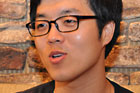
However, the 8th in Seoul saw the launch of just such a conservative student organization, “Korea University Student Forum”, le by Byeon Jong Kook, a 4th year student at Yonsei University.
The Daily NK met with Byeon on the 10th to listen to his vision for the forum, why he chose the vehicle of a “conservative” student organization, and to what definitions of “conservative” and “progressive” he adheres.
– Conservative student organizations are not common, so what led you to organize the Korea University Students’ Forum?
I hate the way that university students, who are called intellectuals, are swayed by this society.
It happed before, when I started my military service. Kim Mun Sun, the Grand National Party governor of Gyeonggi Province at that time, visited my university to give a lecture on North Korean human rights issues. Members of the General Association of Korean Universities held a protest against that lecture. I was not able to understand why that organization, which was considered progressive and laid stress on human rights issues, would disturb a lecture on North Korean human rights. They insisted on only one thing, “Since when has the GNP had an interest in North Korean human rights issues?”
Since then, I have tried to listen to pro-GAKU people, and the other side which criticizes them. Thereafter, I figured out that GAKU is a contradiction, and that criticisms of those so-called progressive student organizations are persuasive.
Around the time when I was set to be discharged from the military, the candle light protests (anti-Korea and KORUS FTA demonstrations in May and June, 2008) were reaching their peak. As a soldier, I couldn’t participate in the protests, so looked at public opinion on the Internet. I felt that the opinion of one side was dominant, as if it was the common opinion of the whole. Moreover, I got the strong impression that university students were being swayed by that opinion without knowing the specific background to the issue. It didn’t look like the act of intellectuals. I thought, if they had known correctly the truth of U.S. beef, would they have had raised their voices against it?
Going though these issues, I learned that there are so many facts that we don’t know correctly. Therefore, I felt the need to study more and with the mantra, “Participate only after knowing something properly,” I started studying and discussing social issues. It was the starting point of the Korea University Student Forum.
– What is the significance of the Korea University Student Forum as a conservative organization?
Some consider us extreme right-wingers, children of the New-Right group (which pursues small government, free-market economy, democracy and improvement of North Korean human rights), and descendants of the pro-Japanese colonial government. However, inside of this organization, we have progressive and conservative students all together. As the two sides discussed, “What efforts and activities are necessary for Korea’s development?” we began giving weight to liberalism, democracy, and economic development and so on. That resulted in the “conservative” reference. We want to be seen as a students’ organization, which deliberates on the development of Korea.
– I wonder if you have any standard by which to divide progressives from conservatives.
I believe true conservatives can be respected by the people, while progressives can pursue gradual reform by practicing it themselves first and leading public opinion when society needs to be reformed. Additionally, sincere progressives should acknowledge the identification of Korea, as indicated by the constitution. Therefore, pro-North Korean regime groups or North Korean regime followers cannot be called progressives.
As we parted company, Byeon appended the organization’s future plans, saying, “In the future, we will expand the Forum’s activities more and more. Besides our regular seminars, we plan to carry out regular voluntary activities with the assistance of community welfare centers.”