

[imText1]Since 2002’s 7.1. economic reform measures, North Korea’s markets have become most vital part of peoples life. North Korean market system operates from ‘general market’ with huge process chain to small local ‘yard market’ in the remote countryside. And, in between, there are always some brokers.
An importer buys goods from China and transports them through cargo trains or trucks to large cities in North Korea, such as Hamheung, Chongjin, Pyongsung or Nampo. Wholesale traders take those products and resell to local businesspeople. In North Korean jargon, such process is called “running.”
Usually imported goods from China or North Korean domestic ones take three steps of circulation; one or two laps of ‘run’ is added in case of mountain area.
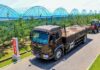
Wholesale is mostly carried out by cars. Since oil and vehicles are not enough, sometimes wholesalers rent cars by themselves.
A forty one-year old trader working in Dandong, China, Kim, said that he purchases goods from Chinese factories firsthand. If the amount of import is huge, Kim uses freight. If not, a few trucks are fine for him. At maximum, Kim bought 60 tons of texture from China at once and resold it to North Korean wholesaler in one month.
In Hyesan, Yangkang province, 38-year old Choi, a broker of mainly Chinese cloths and shoes, sells his stuff to nearby Chongjin. Choi told the Daily NK “There are two types of so-called running; first run and second run. “Running” requires a lot of capital like money for vehicles. So the person must be patient and cautious when buying and selling something.”
According to the interview with Kim, using vehicle in wholesale business takes from 3.5 million NK wons (roughly 1,000 US dollars) to 35 million wons. The money includes not only car rental but also “transportation permit” application fee. Transportation permit is required when vehicle and personnel move inter-province, and costs relatively large amount of cash.
Kim keeps about twenty percent of total sales as his profit. The other 80% is comprised of original price of goods, car tax, gasoline and multifarious types of ‘extra expenses,’ or bribe.
The “first run” business is apportioned to a few with privilege in North Korea. Those who can earn cooperation from Security Agency and police are able to do the first run. Without bribery, it is impossible to obtain various permits that are essential for any businessperson.
In addition, to trade with overseas Chinese merchants, one must possess enough wealth and credit. Credit enables North Korean businessmen to buy goods in China with comparatively low price. Those first runners are, in most cases, wealthy North Koreans with ten thousand US dollars cash on their hand at any moment.