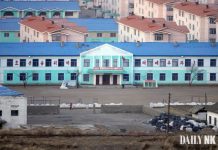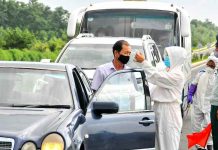


Amid the many facets of theNorth Korean tilt toward China, tourism and cross-border business ties have taken on particularly important roles. The money that these legal activities bring into North Korean coffers is, no doubt, significant to Pyongyang, but more importantly, tourism and business links are employed to assure Beijing that North Korea is serious about the prospect of “opening up” towards China.
When Chinese businessmen are cheated by North Korean partners or Chinese tourists suffer while inside North Korea, the fallout has the possibility to become severe. Given free rein, China’s online nationalism could very easily be aimed at North Korea. Simply because Chosun Central News Agency (KCNA) and Xinhua journalists are exchanging delegations and writing more happy dispatches than usual about one another does not preclude a public relations rupture.
On November 26th, recent bilateral cooperation on tourism faced its most serious challenge to date when two busses carrying Chinese tourists and businessmen crashed successively on a road outside of Pyongyang, resulting in the deaths of seven Chinese nationals and three North Koreans.
Fearing harm to sensitive bilateral ties, the authorities in Beijing suppressed elaboration and discussion of the incident in the official Chinese news media.
According to reports published by the PRC embassy in Pyongyang,the two busloads of Chinese were 60 km outside of Pyongyang when “rain which had frozen on the road” caused the first bus containing seventeen Chinese businessmen to plunge off of a bridge, and the second bus to lose control and flip over. The Chinese Embassy noted that “many local cars have also had an accident at the same spot,” a somewhat incongruous explanation given the lack of automobile traffic in North Korea.
A few online Chinese discussion sites like Sohu.com gave vent to complaints of corruption, alleging that the delegation of seventeen Chinese businessmen involved in the crash had had its expenses paid out of public funds. The major Chinese media outlets uniformly reproduced the Embassy’s terse original press release, a good indication that further reporting, investigation, or elaboration on the incident was expressly forbidden by Beijing.
The Chinese Embassy provided no photographs or video of the crash site, but a short television clip released on China Central Television contained a brief statement by an Embassy spokesman, and the Embassy’s release of the information immediately on its website were both indicators of at least a limited degree of Chinese autonomy, or willingness to advocate for its own citizens, within North Korea.
A SinaWeibo news microblog item on the incident garnered more than 480 comments from Chinese netizens. One user from Liaoning province complained that the North Koreans would probably offer another 1000 RMB per victim, as they did, to much mainland scorn, after the shooting last June 4th of Chinese citizens near Dandong. Others commentators were incredulous at the notion that heavy vehicle traffic had helped to cause the accident, and speculated, without being censored, that the incident had been murder.
The only overt North Korean response to the incident was North Korea’s stated desire, quoted in the press release from the Chinese Embassy, to continue to “promote Sino-North Korean friendship, using all our powers to do good work in solving this issue.” Two weeks later, the North Korean government gave an “Order of DPRK Friendship 2nd Class” award to Sun Yafeng, the Chinese military attaché in the PRC Embassy, for his unspecified acts of military-military cooperation.
A final press release from the Chinese Embassy in Pyongyang sought to put a positive spin on events by orienting even further away from any possible comparison of recent events to the death of a South Korean tourist at Mount Kumgang in 2009. The article described how two of the Chinese victims of the bus crashes, recuperating in the Pyongyang Friendship Hospital, tearfully asked Ambassador Liu Hongcai to convey their offerings of cigarettes and hard liquor to the graves of the Chinese volunteers outside of Pyongyang.
If confirmation of the facts were needed, it seemed clear that the Korean War remains the answer to virtually any propaganda problem encountered in the Sino-North Korean alliance. In the meantime, the details of the bus incident seem destined to remain submerged under the icy roads outside Pyongyang.